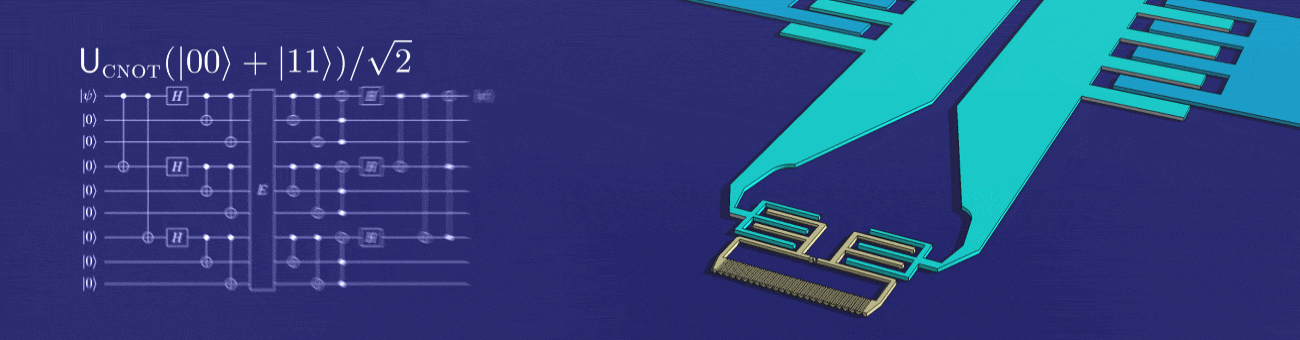

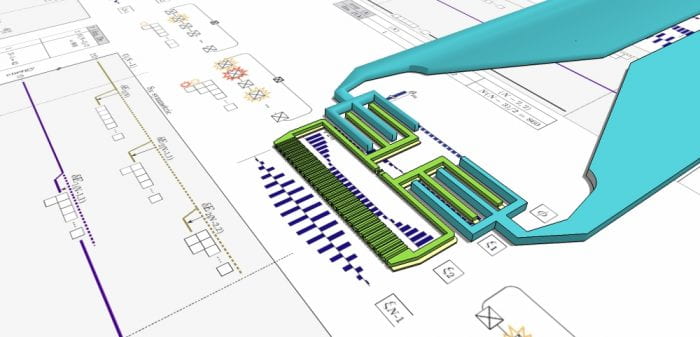
 Research in Koch’s group focuses on the theory, simulation, and advancement of hardware for quantum computing and quantum simulation using superconducting circuits and microwave photons. Koch’s expertise in superconducting qubits and circuit QED reaches back to contributions to the development of the original theory for the transmon and fluxonium qubits. Together with experimental collaborators, his group now works on next-generation quantum circuits with enhanced error protection, on devising protocols for gate operations and quantum-state readout, and on quantum simulation based on interacting photons in circuit-QED arrays.
More details
Quantum physics has played a groundbreaking role in our understanding of the physical world, and in the rapid advance of modern technology impacting everyday life. Quantum mechanics started out as a theory describing objects at the microscopic scale: atoms, electrons, subatomic particles. In such small systems, quantum effects manifest naturally. Nature-given quantum phenomena were thus the immediate focus of early research on quantum mechanics. Since then, the focus has increasingly shifted towards quantum engineering: the active use and control of quantum mechanical effects in man-made devices. The exciting potential for employing such quantum devices in future quantum computers with unprecedented computational power is a major motivation driving research in academia and industry worldwide.
Superconducting circuits provide a promising hardware platform for quantum computation, quantum simulation, and fundamental studies of the coupling between light and matter. Conventional electric circuits have long been perfected in electrical engineering, and have enabled remarkable technological advances. While currents in these circuits are governed by classical physics, striking quantum behavior can emerge when circuits are fabricated of superconducting material. Simple superconducting circuits behave like artificial atoms with quantized energy levels and feature large dipole moments coupling them to the electromagnetic field. Thanks to these properties, they have been embraced as a powerful architecture for realizing quantum bits.